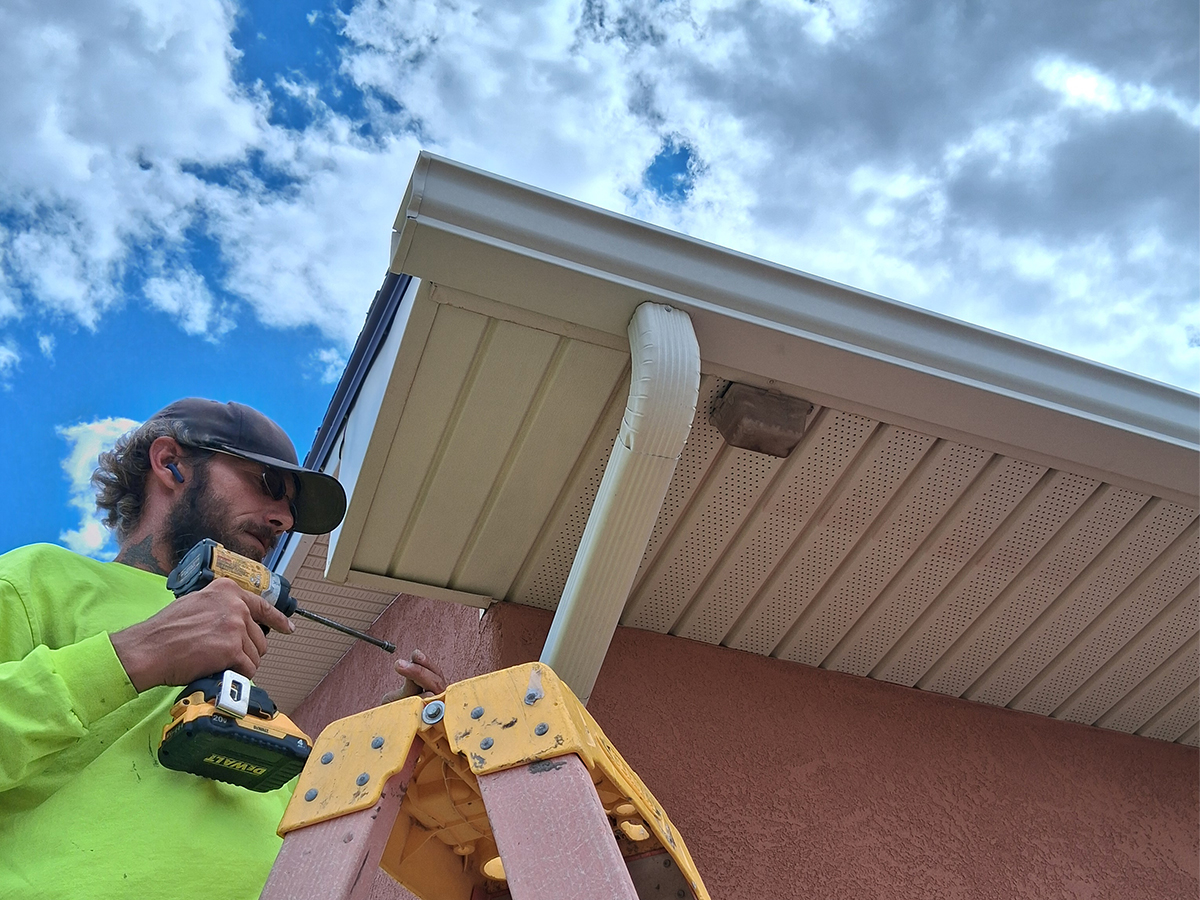
Gutters and downspouts are part of a home's water-management system. When they are correctly sized, secured, and directed away from the structure, they help move roof runoff away from roof edges, siding, landscaping, and foundation areas. Kruger Roofing installs and evaluates gutter and drainage components as part of a complete roofing conversation.
A roof drainage system works as a whole
Gutters, downspouts, hangers, outlets, roof edges, and the discharge path work together. A problem in one part of the system can cause overflow, staining, erosion, or water collecting near the building.
System design should account for roof geometry, valleys, roof area, nearby walkways, landscaping, and where water can be directed safely away from the property.
- Seamless aluminum gutters and downspouts
- Gutter guards and debris-management discussions
- Drainage review around roof edges and discharge points
- Repair or replacement planning for damaged components
Signs your gutters need attention
Overflow during rain, sagging sections, loose fasteners, peeling paint, water marks on siding, erosion beneath downspouts, or water collecting near the foundation are practical signs to investigate. Clogs can also add weight and contribute to drainage problems.
A roof inspection is a useful time to review gutters and downspouts because their condition can affect roof-edge details and the way runoff leaves the building.
Maintenance and safety
Regular ground-level observation after rain can help you notice overflow or discharge issues. Cleaning and repairs should be completed safely; ladders and roof edges create real fall risks, particularly when surfaces are wet or damaged.
Kruger Roofing can discuss the condition of the visible system and recommend appropriate repair, replacement, or maintenance next steps.