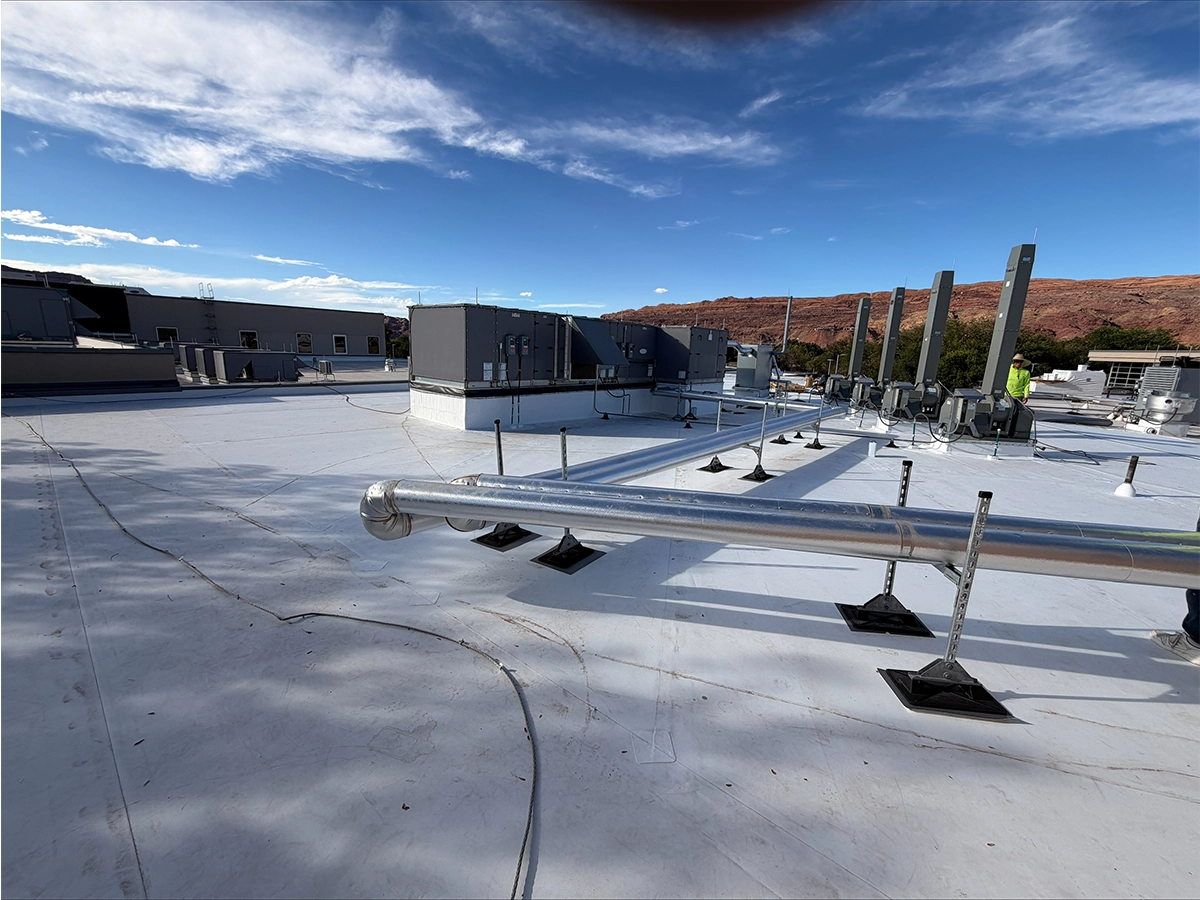
Commercial low-slope roofing requires a system-level view of membrane condition, drainage, insulation, penetrations, seams, and rooftop equipment. Kruger Roofing works with commercial and industrial property owners to evaluate TPO, EPDM, and modified bitumen options and to plan repairs or replacement work around each building's needs.
Low-slope systems we discuss
TPO, EPDM, and modified bitumen are common commercial roofing materials, each with different installation methods and performance characteristics. The suitable system depends on the existing assembly, building use, roof traffic, drainage, budget, and manufacturer requirements.
A roof review considers the membrane as well as flashings, drains, scuppers, parapet walls, curbs, and other details where water management matters.
- TPO, EPDM, and modified bitumen evaluations
- Commercial roof repair and replacement planning
- Drainage, flashing, and penetration reviews
- Maintenance-focused inspections for property managers
Signs a commercial roof needs attention
Ponding water, open seams, split flashing, loose edge metal, recurring interior stains, wet insulation indicators, and damage near rooftop equipment are all reasons to schedule an assessment. Catching a localized issue early can make planning simpler and help reduce the chance of interior disruption.
For occupied buildings, the scope should also consider access, safety, staging, and how work can be coordinated around tenants or operations.
A practical path from inspection to scope
The first step is documenting visible roof conditions and the likely source of concerns. From there, property owners can compare a repair, a restoration approach, or a replacement based on the assembly's condition and the building's priorities.
Kruger Roofing focuses on a clear explanation of the observations, the limitations of each option, and the work recommended for the property.